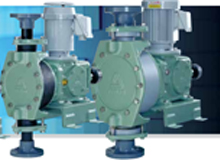
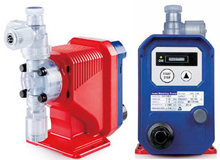
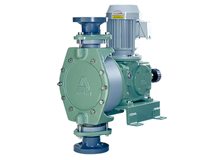
Walchem's LK Series Metering Pumps are Ideal for Large Chemical Feed Applications
The Walchem LK Series metering pumps are motor-driven, mechanically actuated diaphragm metering pumps. This larger LK Series can achieve outputs up to 856 GPH (3240 l/h) and maximum pressures of 220 PSI (1.5 MPa). Ideal for chemical feed applications including water treatment, chemical process, agriculture, mining, and paper.
Read More
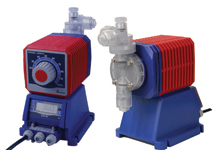
Walchem's EHE Series Metering Pumps is one of the Most Versatile Pumps in the Water Treatment Industry Today
The EHE is the workhorse of the E-Series metering pumps. EHE Series pumps have outputs up to 20 GPH (75 l/h) and pressure capabilities to 150 PSI (10 bar). Combining the EHE performance with a turndown ratio of 1800:1 yields one of the most versatile pumps in the water treatment industry today.
Read More
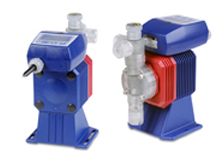
Walchem's EZ Series Metering Pumps Compact Size and Simple Control Make Them Ideal for Water Treatment and OEM Applications
EZ Series electronic metering pumps offer precise chemical injection at a low cost. The compact size and simple control make them ideal for water treatment and OEM applications. EZ Series has outputs to 6.3 GPH (24 l/h) and a maximum pressure of 150 PSI (10 bar).
Read More
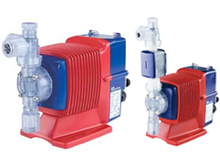
Walchem's EWN Series Electronic Metering Pumps Offer Superior High Speed Dosing Capabilities
The EWN Series electronic metering pumps offer superior high-speed dosing capability with more standard features. The flexibility of the EWN pump enables it to be integrated into virtually any chemical feed application using a universal-voltage, digital controller with an expanded set of control features.
Read More
Walchem's EJ Series Metering Pumps Provide Precise Chemical Injection at an Economical Price
The EJ Series provides precise chemical injection at an economical price. Universal voltage capability enables operation from 100 - 240VAC in virtually all countries. The EJ Series are compact, simple to operate, and have outputs of 1.3 GPH (4.8 LPH) and a maximum pressure of 175 PSI (1.2 MPa).
Read More
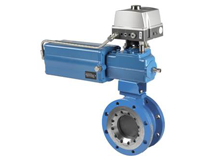
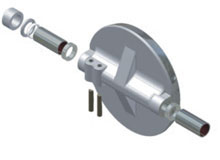
Introducing Neles Series L6 Triple Eccentric Disc Valve for Both Control and Tight Shut-Off Applications
Neldisc? series L6 triple eccentric disc valve operates both in control and shut-off applications, with close to equal percentage characteristics and superior tightness.
Read More
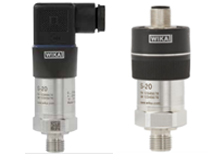
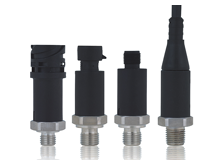
High Performance Pressure Transmitter for General Industrial Applications
WIKA's model S-20 pressure transmitter is the ideal solution for customers with demanding performance requirements in many industrial applications.
Read More
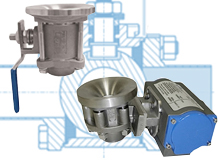
PBM’s Line of Industrial Valves can Handle any Type of Rigorous and General Purpose Applications
Looking to solve crystallization problems, black liquor, or any other problems with solids? PBM's line of Industrial Valves can handle any type of rigorous and general-purpose applications.
Read More
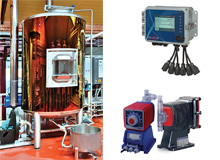
Brewery System - Wastewater Treatment, Boiler Control and Clean in Place Technology
There are several areas that are in need of water treatment and control equipment in breweries. The largest problems arise from the wastewater treatment and boiler control. Another area of concern is the clean in place technology as well as wash downs utilizing sanitizers.
Read More
LK Series Mechanically Actuated and Motor-Driven Metering Pumps Provide Flow Rates up to 856 GPH and Pressures to 145PSI
Iwaki America/Walchem is pleased to announce the release of the next generation of LK series metering pump. These larger, mechanically actuated, and motor-driven metering pumps feature the same rugged design and versatility of their smaller LK pump but in a bigger package - providing flow rates up to 856 GPH and pressures to 145PSI!
Read More
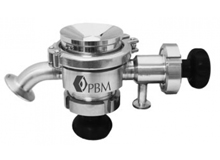
Igenix? Sanitary Valve Minimizes Contamination, Facilitate CIP/SIP and Reduces Downtime
As an ISO 9001 manufacturer, PBM produces standard and custom sanitary valve products for services required to minimize contamination, facilitate CIP/SIP, and reduce downtime. PBM Radial Diaphragm Valves comply with ASME BPE guidelines and offer valve certifications.
Read More
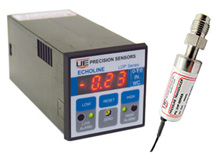
Echoline Low Pressure Monitor and XHP Series High Purity Transducers
Echoline Low Pressure Monitor was developed for semiconductor manufacturers to monitor and balance gas exhaust systems, alert plant engineers to problems, and automate adjustment of high and low trip points before and after system maintenance. The XHP Transducer is designed for accurate, reliable sensing of process gases.
Read More
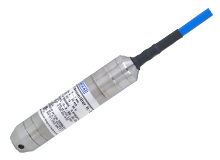
Intrinsically Safe Submersible Pressure Transmitter
WIKA's intrinsically safe submersible pressure transmitter model IL-10 has been designed for the highest requirements of level measurement. Owing to their high accuracy, reliability, and their excellent media resistance, it is the ideal solution for almost all level measurements in hazardous areas.
Read More
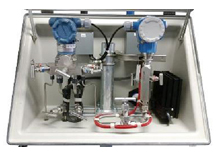
Parflex Engineered Power Solutions: Heated Enclosure Systems for Power Generation
Parflex Multitube? provides system solutions to the power generation market with a fully integrated heated enclosure line as part of our current heated tubing bundle products.
Read More
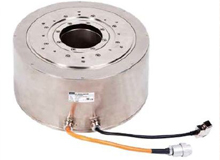
Parker's PM-DD Servo Motor Provides High Torque and High Accuracy
Parker's PM-DD servo motor is designed to provide high torque and high accuracy. Tapped mounting holes and a hollow through bore allow this motor to be used in a variety of applications that require the load to be attached directly to the motor.
Read More
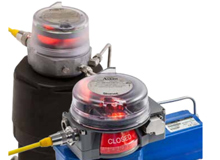
Pharmaceutical and Biotech Solutions from StoneL
StoneL provides solutions that help reduce installation costs through easy setup, faster commissioning, and enhanced valve identification. Bright electronic indication combined with optional remote wireless access provides enhanced risk management and improved safety.
Read More
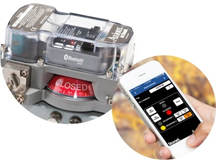
Access Hard-to-Reach Automated Valves with the Axiom AMI with Wireless Link
Discover convenient remote access of your automated valves when you install the Axiom AMI with AS-Interface featuring Bluetooth? technology from StoneL.
Read More
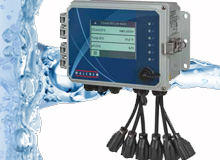
W600 Controllers: Take Control Now and Connect with the Best!
Walchem's W600 series controllers provide reliable, flexible, and powerful control for your water treatment program. The large touchscreen display with icon based programming makes setup easy and the universal sensor input provides extraordinary flexibility; the same controller can be used with almost any type of sensor needed.
Read More
Jamesbury Wafer-Sphere? Butterfly Valve Compared to Rubber Lined Butterfly Valve
Submitted by Don Wolff
The Jamesbury high-performance valve is a heartier concept than the rubber-lined version. The term 'high performance' when considering the butterfly valve means the valve will take full ANSI pressure ratings, shuts off 'bubble tight', has higher temperature ratings, and, through the use of design and materials, has a much higher cycle life (extending into the millions of cycles without failure or leakage).
Read More
Proximity Sensors for Linear Valve Position Sensing
The explosionproof Hawkeye, with its stainless steel enclosure, is designed for service in harsh process environments. It features a solid state proximity sensor which is encased in a shock absorbent urethane potting material.
Read More
WIKA Announces the New MH-3 Pressure Transmitter for Mobile Working Machines
Determining problems and errors in the field just got easier with the new WIKA MH-3 pressure transmitter for mobile working machines. WIKA Instrument, LP captures the latest pressure sensor technology with the addition of the diagnostic function in the new MH-3 pressure transmitter.
Read More
Introduction to Pressure Part II: Velocity, Flow Rate and Reaction Force
Submitted by Russ Rochambeau, Engineering Manager, IFPS Hydraulic Specialist
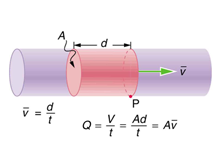
In order to determine the Flow Rate represented as Q, we must define both the volume V and the point in time it is flowing past represented by t, or Q = V/t. Additionally, Flow rate and velocity are related by the equation Q = Av where A is the cross-sectional area of flow and v is its average velocity.
Read More
Prism PI - Intelligent Valve Communication and Control for Linear Applications
Submitted by StoneL
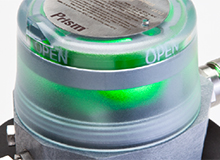
The Prism PI integrates an advanced position sensing system and integral pneumatic control for sanitary diaphragm and other linear applications. Compact and durable, the PI is suited for corrosive, heavy washdown, and hazardous areas.
Read More
Control Valve Flow Characteristics
Submitted by Jon Monsen, Ph.D.
Selecting a valve with the correct flow characteristic (the relationship between valve opening and flow capacity) can be as important as the selection of the valve size.
Read More